
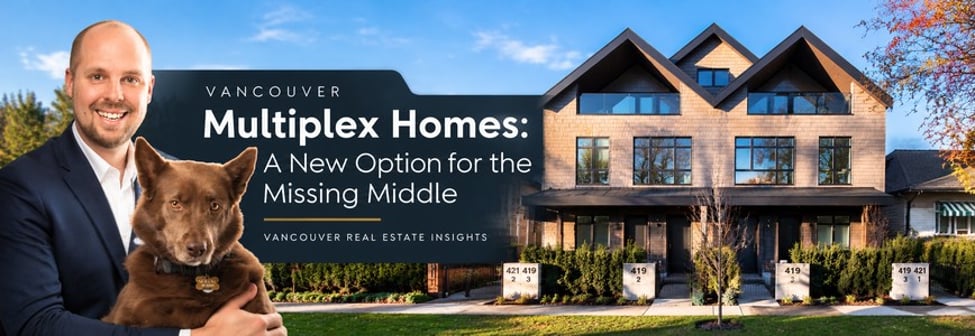
Could multiplex homes help Vancouver's growing families, first-time buyers and downsizers find more housing options in the neighbourhoods they love?
Vancouver's residential neighbourhoods are changing. Across the city, we're seeing more duplexes, coach homes, townhouses and multiplex developments appearing on streets traditionally dominated by detached houses.
Recently, I toured a newly constructed multiplex development near Cambie Street and West 23rd Avenue called Yukon Village. The project features six individual homes, with different layouts designed to accommodate a variety of household sizes.
Two homes caught my attention: a three-bedroom coach home listed at $1,438,000 and a larger four-bedroom residence listed at $1,850,000 plus GST.
Another interesting example is 2995 Adanac Street in East Vancouver, a three-unit development featuring two-, three- and four-bedroom homes.
While these aren't necessarily inexpensive properties, they demonstrate how Vancouver's housing landscape is evolving and why multiplex developments could become an important part of what's often called missing middle housing.
For families looking for more space, downsizers hoping to remain in familiar neighbourhoods, or buyers seeking alternatives to condominium living, multiplexes offer another option worth exploring.
What Is Missing Middle Housing?
Missing middle housing refers to homes that fall between traditional detached houses and larger apartment buildings.
These can include duplexes, triplexes, fourplexes, multiplexes, smaller townhouse developments and low-rise residential buildings.
For decades, much of Vancouver's residential zoning restricted how many homes could be built on individual lots. While duplexes and secondary suites existed in some areas, constructing several separately owned homes on a typical residential property was often not permitted.
That began to change in October 2023, when the City of Vancouver introduced new zoning regulations allowing multiplex development in many neighbourhoods previously zoned primarily for detached houses.
Under the City's R1-1 zoning framework, eligible lots can accommodate three to six strata homes, or up to eight secured rental homes, depending on property characteristics and development requirements.
Rather than concentrating all new housing in high-rise developments, multiplexes allow additional households to live in established residential neighbourhoods.
Importantly, these homes can come in a variety of sizes and configurations.
A Real Vancouver Example: Yukon Village at West 23rd Avenue
Yukon Village, located just off Cambie Street, provides an interesting example of what this type of development can look like.
The project consists of six homes across two buildings, with four residences in the front building and two in the rear.
Instead of a single detached home occupying the property, six households can enjoy individual residences in an established Vancouver neighbourhood.
What's particularly interesting is how different the homes can be within one development.
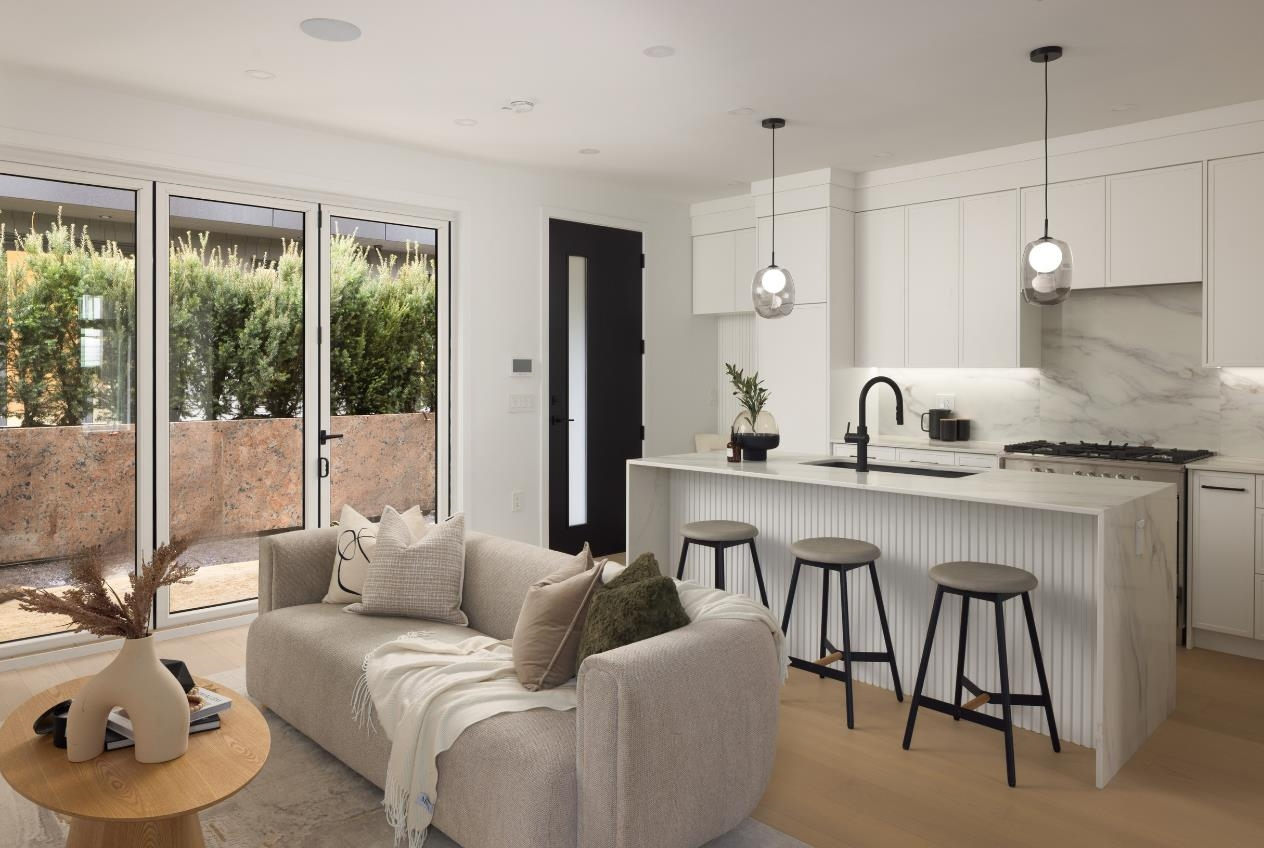
1-421 W 23rd Avenue: Three-Bedroom Coach Home
Asking price: $1,438,000
This newly constructed residence offers approximately 1,172 square feet of living space over two levels, with three bedrooms and two-and-a-half bathrooms.
The home also features a private patio, its own entrance and contemporary finishes.
For someone moving out of a two-bedroom condominium, a property like this could offer an additional bedroom, more separation between living and sleeping spaces, and the appeal of ground-oriented living.
There are compromises, of course. The home doesn't have designated parking, and buyers should account for strata fees, property taxes and other ownership costs.
Still, it illustrates how a multiplex can offer a housing alternative that might otherwise be difficult to find in a neighbourhood like Cambie.
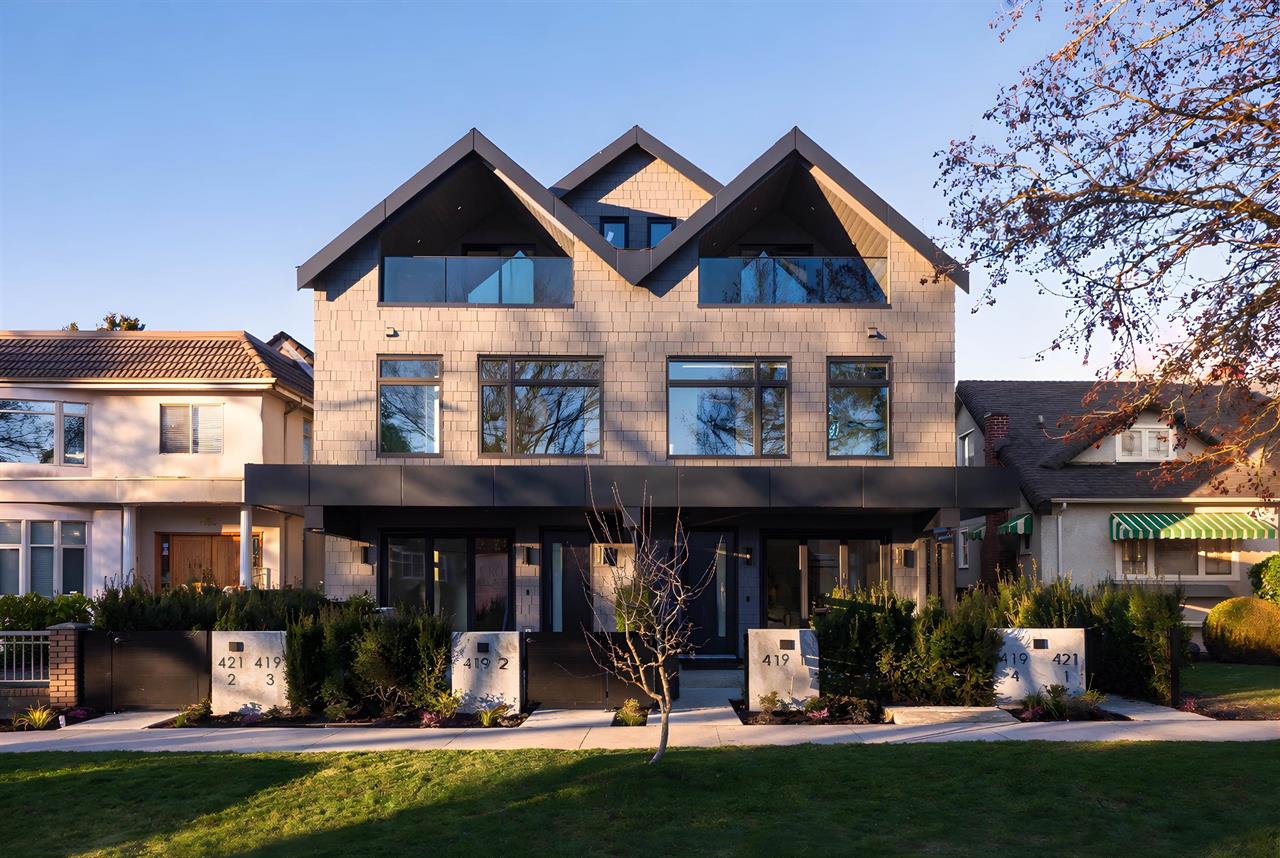
Asking price: $1,850,000 plus GST
Another residence within the same development offers a considerably different layout.
With approximately 1,735 square feet across three levels, this home includes four bedrooms, four bathrooms, private outdoor space and a gated carport.
Three bedrooms are located together on one floor, while the fourth bedroom occupies the upper level with its own ensuite.
That additional space could be particularly appealing to growing families, households needing a home office, or families looking for greater flexibility as their needs change.
The property also offers modern heating and cooling systems and convenient access to neighbourhood amenities, schools and transit.
At $1.85 million plus GST, it's a substantial investment. However, for buyers comparing newer homes in established Vancouver neighbourhoods, it provides an alternative to purchasing a detached house.
One question that often comes up when comparing these properties is whether an older detached home might be a better purchase.
I've explored that question in another article, Should I Buy an Older House or a Newer Half Duplex in Kitsilano?, where I discuss the trade-offs involving maintenance, outdoor space, renovation costs and long-term ownership.
One Development, Different Housing Needs
What I find most interesting about these two properties isn't necessarily the finishes or architectural design.
It's the flexibility of the housing itself.
Within the same development, you have a more compact three-bedroom residence and a larger four-bedroom home designed for households requiring additional space.
Both offer ground-oriented living, but with different layouts, outdoor areas, parking arrangements and price points.
That's one of the potential advantages of missing middle housing: introducing greater variety into neighbourhoods where buyers have historically had fewer choices.
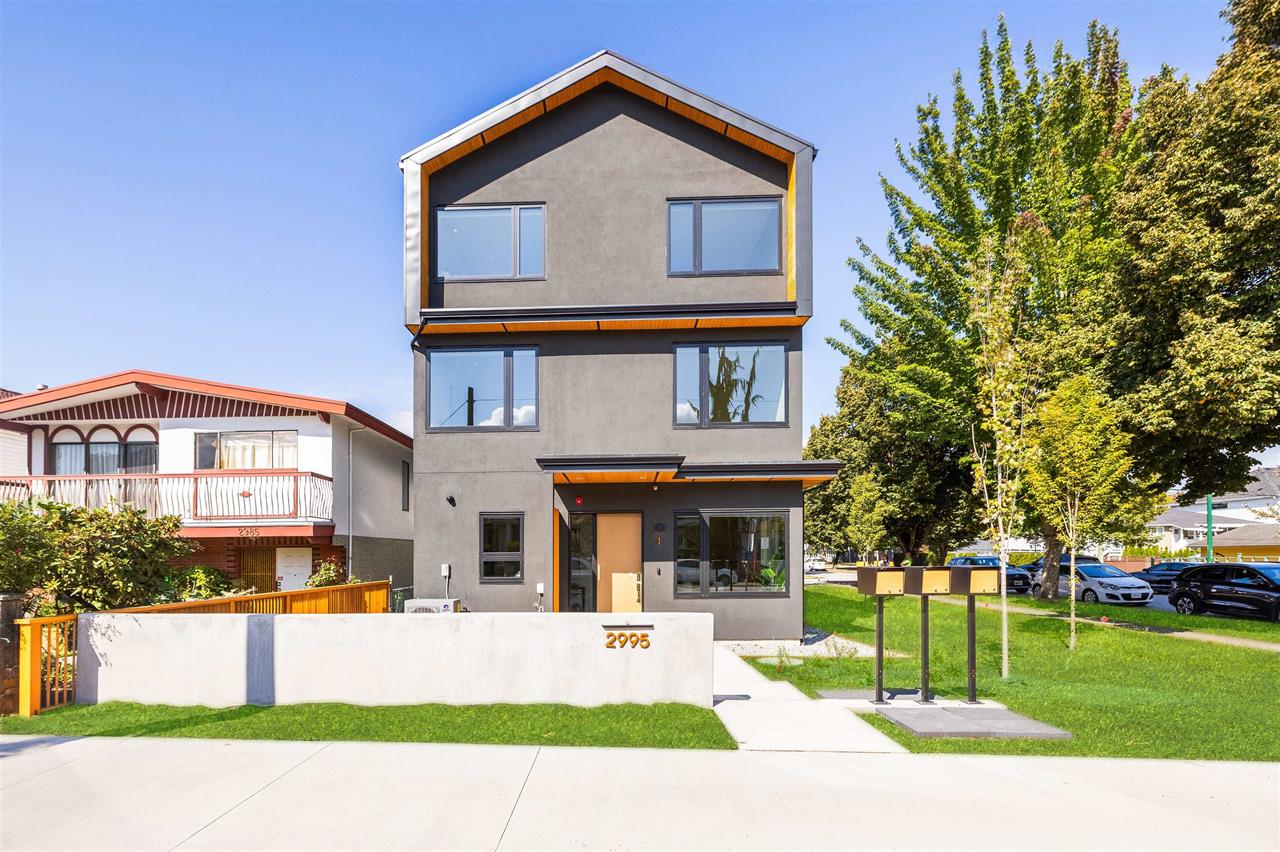
While Yukon Village demonstrates how six homes can be accommodated within one development, another newly constructed project at 2995 Adanac Street offers a different approach.
Located in East Vancouver near Hastings-Sunrise and Renfrew, this development features three individual residences.
The properties include:
A two-bedroom residence advertised at approximately $820,000
A three-bedroom plus den residence advertised at approximately $1,499,000
A four-bedroom residence advertised at approximately $1,549,000
These advertised prices illustrate a wider range of options than those at Yukon Village, although the homes also differ in size, layout and location.
The smaller two-bedroom home may appeal to someone purchasing their first property or downsizing from a larger residence.
The larger homes offer additional bedrooms and flexibility for families looking for more space.
What I find interesting about comparing these two developments is that they demonstrate how multiplex housing can take different forms.
One project accommodates six households near Cambie Street, while another creates three homes in an established East Vancouver neighbourhood.
Both introduce additional housing without requiring the construction of a large apartment building.
And that's part of the appeal of missing middle housing: providing a greater variety of homes within existing communities.
Why Does Vancouver Need More Housing Choices?
Vancouver's housing challenges aren't simply about the number of homes available.
They're also about the types of homes people need as their lives change.
Imagine a couple who purchased a two-bedroom condo several years ago. Since then, they've had children, started working from home and realized they need more space.
They love their neighbourhood. Their children attend a nearby school, their friends live close by and they've built relationships within the community.
Moving into a detached house might seem like the obvious next step, but with many detached properties in Vancouver priced well above $2 million, that may not be financially realistic.
For years, growing families have often faced a difficult decision: remain in a smaller home or relocate farther away to find something larger.
Multiplex housing offers another possibility.
A three- or four-bedroom residence in an established neighbourhood could allow a family to remain close to schools, parks, transit and familiar amenities without purchasing an entire detached property.
This doesn't mean these homes will be affordable for everyone.
But adding different housing types gives buyers more options, and choice is an important part of a healthy housing market.
Who Might Benefit From Multiplex Housing?
Growing Families
I see growing families as one of the strongest potential markets for multiplex homes.
Families often need more than additional square footage. They need functional layouts, bedrooms that accommodate children, outdoor areas and sufficient storage.
A three- or four-bedroom multiplex residence could offer some of these features without all the maintenance responsibilities of a detached house.
Of course, not all floor plans are created equally. Stairs, bedroom dimensions, outdoor space and storage should be carefully considered.
Another important factor for families is location.
Being close to schools, parks, recreation facilities and neighbourhood amenities can be just as important as the home itself.
I've written about this in Choosing the Right School Catchment in Kitsilano, where I explain how school boundaries and neighbourhood considerations can influence a family's home search.
First-Time Buyers
For first-time buyers, affordability remains a major hurdle, particularly with new construction.
While the larger homes in developments like Yukon Village may be beyond many first-time buyers' budgets, projects such as 2995 Adanac Street demonstrate that smaller multiplex residences can be offered at different price points.
As more housing is constructed, the variety of available properties could expand, creating additional opportunities for buyers with different needs and budgets.
For someone new to Vancouver's housing market, understanding the differences between condominiums, townhouses, duplexes and multiplex homes can be an important first step.
If you're beginning your property search, my article I Just Moved to Vancouver and Want to Buy a Home. Where Do I Start? walks through the buying process, financing considerations and how to choose the right neighbourhood and property type.
Downsizers
Another group I'm particularly interested in is homeowners who want to downsize without leaving their neighbourhood.
Consider someone who has lived in Kitsilano, Dunbar or Cambie for 30 years. Their children have moved out, and maintaining a large detached property may no longer make sense.
However, they're not necessarily interested in moving into a high-rise condominium.
A multiplex home could provide a smaller residence, a private entrance and some outdoor space while allowing them to remain close to familiar shops, neighbours and community connections.
For this group, accessibility, stairs and long-term maintenance are especially important considerations.
A thoughtfully designed single-level residence might be more appropriate for some downsizers than a three-storey townhouse, regardless of how attractive the finishes might be.
Investors
Multiplex developments may also appeal to real estate investors, although the investment strategy matters.
Purchasing an individual strata residence is very different from developing or owning an entire multiplex building.
Investors should carefully evaluate rental regulations, financing, operating expenses and potential returns rather than assuming that newer construction automatically makes a better investment.
Location and resale demand also matter, particularly when considering how a property's value compares with traditional condominiums, duplexes and townhouses.
Multigenerational Families
Multiplex housing also creates interesting possibilities for families who want to live close to one another.
Imagine parents purchasing one unit while an adult child and their family purchase another within the same development.
They could maintain separate households while remaining close enough to provide support, share responsibilities and spend time together.
It's not necessarily a solution for every family, but it's another example of how Vancouver's housing needs extend beyond the traditional detached house or condominium.
Are Multiplex Homes Actually More Affordable?
This is an important question, and I think we need to be realistic about the answer.
Multiplex homes can be less expensive than detached houses in the same neighbourhood, but that doesn't automatically make them affordable.
The developments at West 23rd Avenue and Adanac Street illustrate this well.
At Yukon Village, a three-bedroom residence is listed at approximately $1.44 million, while the larger four-bedroom home is asking $1.85 million plus GST.
At 2995 Adanac Street, advertised prices range from approximately $820,000 for a smaller two-bedroom home to around $1.55 million for a larger four-bedroom residence.
These are significant purchase prices, particularly for first-time buyers.
However, when compared with the cost of acquiring a detached house in many Vancouver neighbourhoods, multiplex homes may offer a different entry point into ground-oriented ownership.
One of the economic advantages of multiplex development is that land costs can be distributed across multiple residences rather than a single detached home.
But land acquisition, construction, financing, servicing, municipal fees and development timelines remain expensive.
Those costs ultimately influence what buyers pay.
For that reason, I prefer to describe multiplexes as an additional housing choice rather than suggesting they're automatically an affordable solution.
The value depends on the individual property, location, size, layout and alternatives available to buyers.
For a more detailed comparison of traditional ownership options, you can also read my article Half Duplex vs Detached House in Kitsilano, which explores how property type can influence both lifestyle and long-term costs.
How Might Multiplexes Change Vancouver's Neighbourhoods?
I expect we'll continue to see more multiplex developments across Vancouver as property owners and builders explore the opportunities created by updated zoning.
Neighbourhoods such as Cambie, Kitsilano, Mount Pleasant, Dunbar and Hastings-Sunrise are interesting because of their established amenities, schools, transit connections and mix of housing styles.
Multiplex developments have the potential to increase the number of households living within these communities without relying exclusively on large apartment buildings.
This could help more people live near existing services and employment centres.
But there are also legitimate considerations around parking, infrastructure, construction activity, tree retention and neighbourhood character.
Not every property is suitable for redevelopment, and not every proposed multiplex will make financial sense.
These are questions that deserve careful consideration as the city continues to evolve.
What Should Buyers Consider Before Purchasing a Multiplex Home?
Although many multiplex residences look similar to traditional townhouses or half-duplexes, buyers should understand the details of what they're purchasing.
Important considerations include:
Ownership structure: Is the property strata-titled, and what areas are individually owned or shared?
Strata fees: What expenses are covered, and how will maintenance and future repairs be funded?
GST: Is GST included in the asking price, and does the buyer qualify for any available rebates?
New-home warranty: What warranty coverage applies, and who is the licensed builder?
Outdoor space: Is the patio or yard part of the strata lot or designated as limited common property?
Parking and storage: What is included with the residence?
Layout and accessibility: Will the floor plan continue to work as household needs change?
Resale potential: How does the home compare with existing condos, townhouses and duplexes in the surrounding neighbourhood?
These are many of the same questions I'd explore with clients purchasing any newly constructed property.
While a new home can be appealing, construction quality, functional design, strata documents and the total cost of ownership still matter.
Vancouver's Missing Middle: More Than Just Another Housing Trend
After touring Yukon Village near Cambie and West 23rd Avenue, what stood out to me was how one residential property could accommodate six homes with different layouts and household needs.
And looking at developments like 2995 Adanac Street in East Vancouver, it's clear that multiplex housing doesn't follow a single design or price point.
For some people, a compact two-bedroom home might be enough.
Others may prefer the additional space and flexibility of a three- or four-bedroom residence.
And for homeowners considering what the future might hold for their own property, multiplex development introduces another layer to the conversation about land use and potential value.
I don't believe multiplexes will solve Vancouver's affordability challenges on their own.
But I do think they'll play an increasingly important role in creating more housing choices, particularly for people who want to remain in established neighbourhoods without purchasing a detached house.
Ultimately, Vancouver needs homes that reflect the different ways people live, whether they're buying their first property, raising a family, downsizing or investing for the future.
And that's why I believe missing middle housing is a topic worth paying attention to.
Coming Next: Can You Build a Multiplex on Your Vancouver Property?
This is Part 1 of my three-part series exploring multiplex housing in Vancouver.
In Part 2, we'll look at what makes a property suitable for multiplex development, including zoning, lot dimensions, development costs and whether building a multiplex actually makes financial sense.
In Part 3, we'll explore what buyers should know before purchasing a multiplex home, including strata ownership, new-home warranties, GST and long-term resale considerations.
Curious About Multiplex Homes in Vancouver?
Whether you're searching for a three-bedroom family home, considering downsizing or wondering how multiplex development could affect your property's value, I'm always happy to have a conversation.
As a Vancouver Realtor and longtime Kitsilano resident, I enjoy exploring the different housing opportunities emerging across our neighbourhoods.
If you'd like to compare multiplex homes, duplexes, townhouses or other properties in Vancouver, feel free to reach out.
Sheldon Coxford | Vancouver Realtor®
TRG The Residential Group Realty
778-835-5621 | SheldonHomes.ca
Property examples: 1-421 W 23rd Avenue, 4-419 W 23rd Avenue and residences at 2995 Adanac Street, Vancouver. Advertised asking prices referenced as of October 2026 for educational purposes. Listing details, availability and applicable taxes should be confirmed before making a purchasing decision.
Additional resource: City of Vancouver: Build a Multiplex